

 See My Latest Article on HelloNation
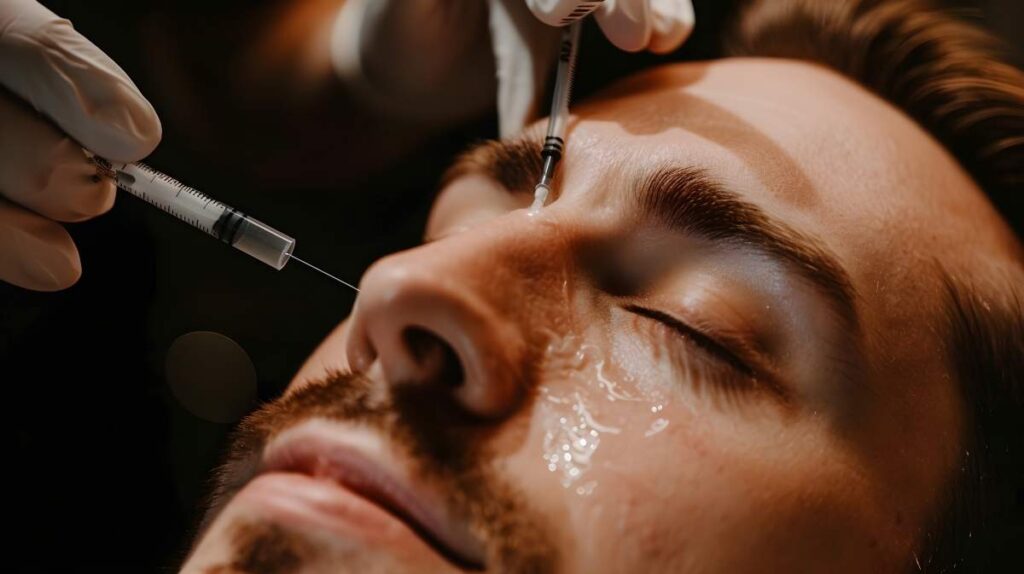
Cosmetic injections are widely discussed, but many common claims about Botox and dermal fillers blur important differences between the two treatments. Understanding what each product does, what it cannot do, and which risks deserve attention can help residents make more informed decisions.
Are Botox and dermal fillers the same thing?
No. Botox is a brand name commonly used for botulinum toxin, a prescription injectable that temporarily reduces muscle activity. Dermal fillers are gel-like substances placed beneath the skin to add volume, soften folds, or restore fullness in selected areas.
Botulinum toxin is generally used for expression-related lines, such as:
- Forehead lines
- Frown lines between the eyebrows
- Crow’s-feet at the outer corners of the eyes
Fillers may be used for concerns involving lost or limited volume, including certain facial folds, lips, cheeks, chin, and the backs of the hands. The appropriate product depends on the treatment area, anatomy, medical history, and the specific approval and labeling for that filler.
Because the mechanisms are different, Botox cannot replace filler, and filler cannot duplicate the muscle-relaxing effect of Botox.
Myth: Botox permanently freezes the face
Botox does not have to create a blank or expressionless appearance. The result depends on the injection pattern, amount used, muscle strength, facial structure, and the practitioner’s understanding of facial movement.
The medication temporarily reduces contraction in targeted muscles. It does not remove the ability to make every facial expression. A poorly placed or excessive treatment can contribute to an unnatural appearance, uneven eyebrows, eyelid drooping, or reduced movement, but those outcomes are not the intended result of a carefully planned treatment.
Results are temporary. Effects often become noticeable over several days, with the duration varying by product, treatment area, dose, and individual metabolism. Repeated treatment may affect muscle thickness over time, but it does not permanently stop facial aging.
Myth: Fillers simply “fill wrinkles”
Fillers can soften some depressions, but they do more than act like putty beneath a line. Depending on the material and location, they may restore lost volume, support nearby tissue, or alter contour.
That does not mean more filler produces a better outcome. Too much product can create puffiness, heaviness, asymmetry, or an overfilled appearance. Facial balance matters more than treating every visible line.
Some fillers are temporary, while others last longer. Longevity varies with the material, injection site, amount placed, movement in the area, and the person’s biology. A filler’s duration should not be treated as a guarantee.
Myth: “Natural” or “needle-free” means safer
Natural-sounding descriptions do not eliminate medical risk. Even substances that occur naturally in the body can cause allergic reactions, inflammation, infection, nodules, or other complications when injected.
Needle-free injection devices also deserve caution. High-pressure devices can make it difficult to control placement and may cause tissue injury. Purchasing filler or botulinum toxin online and using it independently creates additional concerns involving authenticity, concentration, sterility, storage, and dosing.
A product should come from an authorized medical supply chain and be administered by a properly licensed, trained injector in a setting equipped to manage complications. Injections performed at parties, private homes, informal events, or nonmedical settings can make emergency evaluation and follow-up more difficult.
Myth: Bruising is the only meaningful risk
Bruising, redness, tenderness, and swelling are common short-term effects, but they are not the only risks.
With botulinum toxin, a nearby muscle may become temporarily weak, leading to an uneven brow or drooping eyelid. Rare but serious symptoms can include double vision, difficulty speaking, swallowing problems, breathing difficulty, or generalized weakness. These symptoms require urgent medical attention.
With dermal fillers, the most serious complication occurs when product unintentionally enters or compresses a blood vessel. This can damage skin or, in rare cases, affect vision. Severe or increasing pain, pale or dusky skin, unusual mottling, vision changes, or neurological symptoms after filler injection should be treated as urgent warning signs.
The risk profile also depends on the treatment area. The lips, nose, forehead, and areas around the eyes have different anatomy and different potential complications.
Myth: Filler can always be dissolved
Some commonly used fillers are made with hyaluronic acid and may be reduced with an enzyme treatment when clinically appropriate. That does not mean every filler can be quickly or completely reversed.
Other materials may be difficult or impossible to dissolve. Even with hyaluronic acid filler, removal may require more than one treatment, and swelling or inflammation can complicate evaluation. An enzyme used to break down filler can also cause side effects and must be used for a specific medical reason.

A person should know which product is being injected, where it is being placed, and whether it has an established reversal or complication-management approach.
Myth: Medical spa injections are routine and require little preparation
The procedure may be quick, but it remains a medical treatment. A complete discussion should include health conditions, allergies, current medications, previous cosmetic injections, active skin irritation, bleeding concerns, and the goals of treatment.
Colorado Springs has a dry climate, strong sunlight, seasonal weather changes, and outdoor lifestyle habits that may affect skin comfort and recovery. Dryness, wind exposure, sunburn, or irritated skin can make post-injection swelling and sensitivity more noticeable. Active rashes, infections, or inflamed acne in the treatment area may be reasons to delay injections.
People who are pregnant or breastfeeding should discuss the lack of adequate safety information for elective cosmetic injections before proceeding. The same applies to anyone with a history of severe allergic reactions, unusual scarring, neuromuscular disease, or significant bleeding problems.
How can residents evaluate injection safety?
A few practical questions can reveal whether an injection setting follows appropriate safeguards:
- Is the injector licensed and specifically trained in the treatment?
- Is the product labeled, sealed, within its expiration date, and obtained through an authorized source?
- Can the injector explain the product’s intended use, expected duration, and known risks?
- Is there a plan for handling urgent complications?
- Are medical records maintained, including the product name, lot number, dose, and injection sites?
- Does the treatment plan account for medications, allergies, skin conditions, and prior procedures?
Beware of unusually deep discounts, unlabeled vials, pressure to make a quick decision, and products purchased directly by consumers. A lower price does not make an injectable equivalent or safer.
What symptoms require urgent attention afterward?
Mild soreness, swelling, and bruising can occur after injections. More concerning symptoms include difficulty breathing or swallowing, progressive weakness, double or blurred vision, sudden severe pain, vision loss, or skin that becomes pale, gray, dusky, or unusually mottled.
These symptoms should not be dismissed as a normal part of recovery. Urgent medical evaluation is appropriate, particularly after botulinum toxin when weakness extends beyond the expected treatment area or after filler when pain or skin-color changes suggest a possible blood-vessel complication.
The most useful distinction is simple: Botox changes muscle activity, while fillers change volume or contour. Neither treatment is risk-free, neither should be self-administered, and a short procedure still deserves careful medical screening, accurate product information, and clear follow-up instructions.